Image

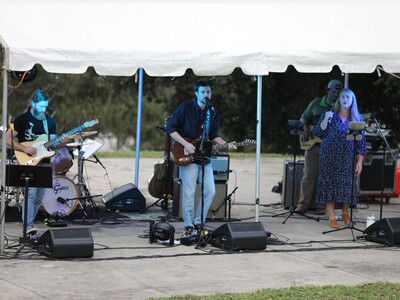
VP/Director of the Otis Redding Center for the Arts Kimberly Kelsey Epps had a smile almost as bright as the Sun at the end of a successful Bragg Fam at the Otis Redding Center for the Arts last Saturday (Photographer Nate Weeks)



Middle Georgians should get ready for high temperatures mostly in the 90s and chances of showers and thunderstorms throughout the week, according to the National Weather Service's forecast. Stargazers this week can gaze at the brilliant blue-white star Spica as it appears near the Moon on Tuesday, if the clouds part enough to allow it. The following is the day-by-day weather forecast for this week in the heart of Georgia.
DAY-BY-DAY WEATHER FORECAST
MONDAY, July 27th
Mostly sunny, with a high temperature near 95, and heat index values as high as 102.
Monday Night
Mostly clear skies, with a low temperature near 75.
TUESDAY, July 28th
Sunny, with a high temperature near 97. West wind increasing 5 to 10 mph, with gusts as high as 15 mph.
Tuesday Night
20% chance of showers and thunderstorms before 11 p.m., then slight chance of showers between 11 p.m. and 2 a.m. Partly cloudy skies, with a low temperature near 78.
WEDNESDAY, July 29th
Mostly sunny, with a high temperature near 95.
Wednesday Night
20%chance of showers and thunderstorms before 2 a.m. Partly cloudy, with a low temperature near 72.
THURSDAY, July 30th
Sunny, with a high temperature near 93.
Thursday Night
Mostly clear, with a low temperature near 72.
FRIDAY, July 31st
20% chance of showers and thunderstorms. Sunny, with a high temperature near 93.
Friday Night
20% chance of showers and thunderstorms. Partly cloudy, with a low temperature near 73.
SATURDAY, August 1st
30% chance of showers and thunderstorms. Mostly sunny, with a high temperature near 91.
Saturday Night
40% chance of showers and thunderstorms. Mostly cloudy, with a low temperature near 71.
SUNDAY, August 2nd
60% chance of showers and thunderstorms, with morning scattered thunderstorms spreading in the afternoon. Mostly cloudy, with a high near 86.
Sunday Night
60% chance of showers with a few thunderstorms. Mostly cloudy, with a low temperature near 71.
ASTRONOMY FORECAST
The Comet 10P/Tempe 2 will travel closest to the Sun on Sunday, August 2nd, according to the Star Walk 2 website. Skywalkers should grab binoculars or a telescope to see this celestial event. If the sky is dark enough, night sky observers should be able to see the comet shortly after sunset. Comet 10P/Tempe 2 is a "large Jupiter-family comet" roughly 6 miles in diameter. In the past, comets were given titles like "the Harbinger of Doom" and "the Menace of the Universe," but nowadays most people give them little thought.


Sunny, with a high of 89 and low of 67 degrees. Sunny during the morning, clear for the afternoon and evening,