62° and Clear
Image
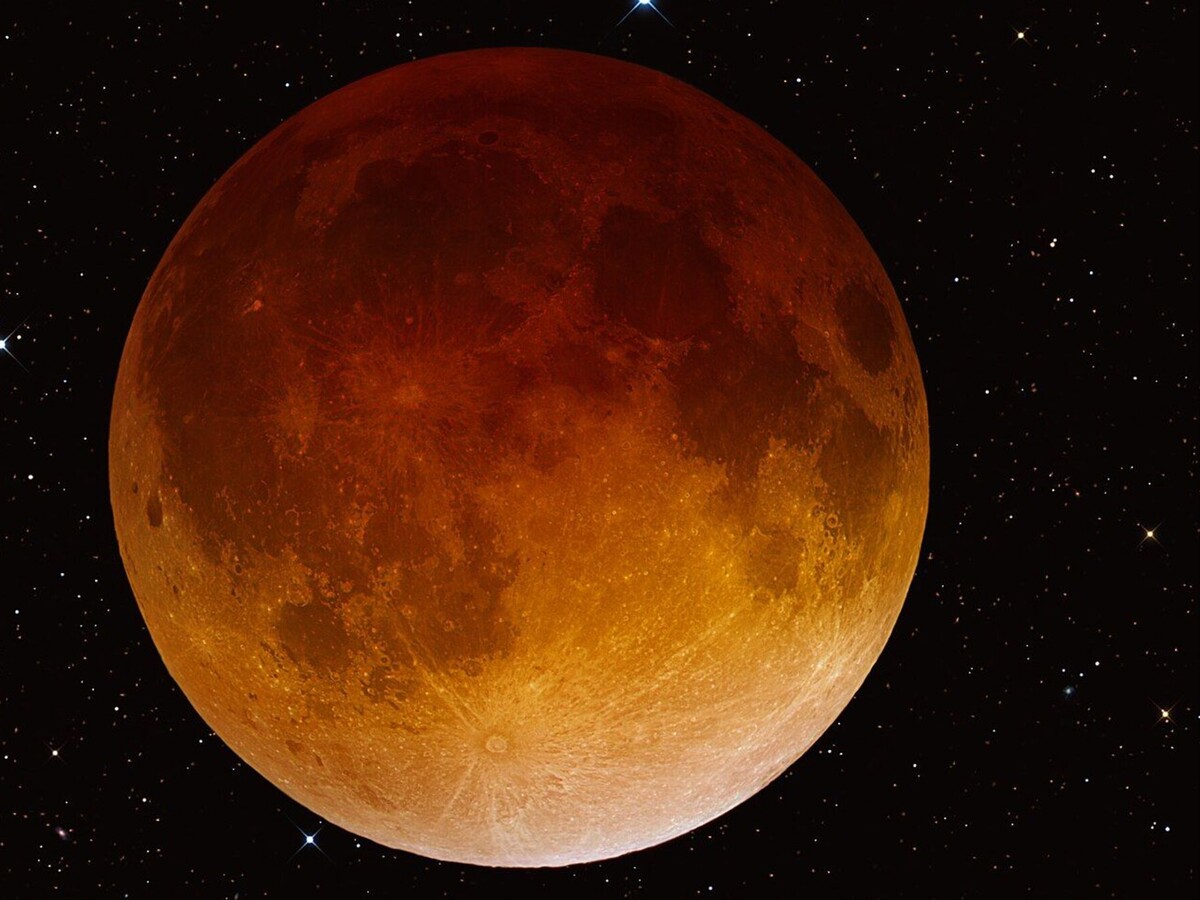
The "Blood Moon' on March 3rd will appear as it does in this photograph by R. Jay GaBany (https://commons.wikimedia.org/wiki/File:Lunar_eclipse_04-15-2014_by_R_Jay_GaBany.jpg)



Skywatchers will delight on Tuesday, March 3rd, when a 'Blood Moon' total lunar eclipse will occur when the Earth moves between the sun and the moon, causing the moon to reflect a dull reddish hue. This will be the first major astronomical event visible so far this year. It will also be the last time to see a lunar eclipse until 2029.
This celestial event will be convenient for early risers in Middle Georgia to view, with the eclipse beginning at 6:04 a.m. and totality (the time when the eclipse is full) occurring around dawn or 6:33 a.m.
During the eclipse, the full moon will appear reddish for only 12 minutes. It will be easily visible in North and Central America, partially visible in Central and South Asia, and not visible in Europe or Africa.
Unlike a solar eclipse, you don't need any special equipment to view a lunar eclipse. The best places for viewing a lunar eclipse have a high vantage point. Because the moon will be near the horizon, and almost going below it, the best place will have no obstructions such as buildings or trees.
The moon will take on a dull red hue during the total lunar eclipse because the Earth's will come between the sun and the moon, casting Earth's shadow onto the moon. Because of the Earth's sunlight filtering atmosphere, filtered rays of sunshine will turn the moon red. For a short while, Earth's atmosphere becomes a projector of sunsets and sunrises onto another celestial body.
Total lunar eclipses are only slightly less common than total solar eclipses. A blood moon occurs about every 2.5 years, and a total solar eclipse happens about every 18 months, according to NASA's astronomical catalogs. The reason total lunar eclipses seem more frequent is that they can be observed more easily, unlike a total solar eclipse, which requires the viewer to be in a narrow area of land to view totality.
Many cultures had stories that explained why lunar eclipses occurred, although they unsurprisingly don't revolve around planets, a giant star, and shadows. The Inca had several myths about lunar eclipses, including that a jaguar attacked and ate the moon. They would shake spears at the moon and make a lot of noise in order to drive the jaguar away so that it didn't move on to eating the Earth once it was done with the moon.
While some myths portrayed the lunar eclipse as a bad or dangerous occurrence, there were some myths with a more positive take. The Hupa people, a Native American tribe from California, had a myth about the moon having 20 wives and many pets like mountain lions and snakes. The story went that the moon sometimes didn't bring them food to eat, and his pets would attack him and make him bleed, which was why the moon took on a blood red hue. The lunar eclipse would end when one of the moon's wives came and collected his blood, then helped him recover from the attacks.
Whatever you decide to believe about the lunar eclipse that will take place on March 3rd, you can get a better view by visiting the Mark Smith Planetarium at Macon's Museum of Arts and Sciences. The planetarium will host a family-friendly event where visitors can view the total lunar eclipse on high-powered telescopes or projected on the huge ceiling of the planetarium. This event is free and open to the public.
Celestial events like the lunar eclipse on March 3rd remind us of the cycles that occur in the universe around us. While current events can create a sense of chaotic danger at every turn, knowing that sunrises, sunsets, eclipses, and meteor showers will take place on a precise schedule can give skywatchers a sense of continuity that is somehow reassuring.



Sunny, with a high of 74 and low of 53 degrees. Sunny during the morning, clear during the afternoon and evening,