71° and Sunny
Image
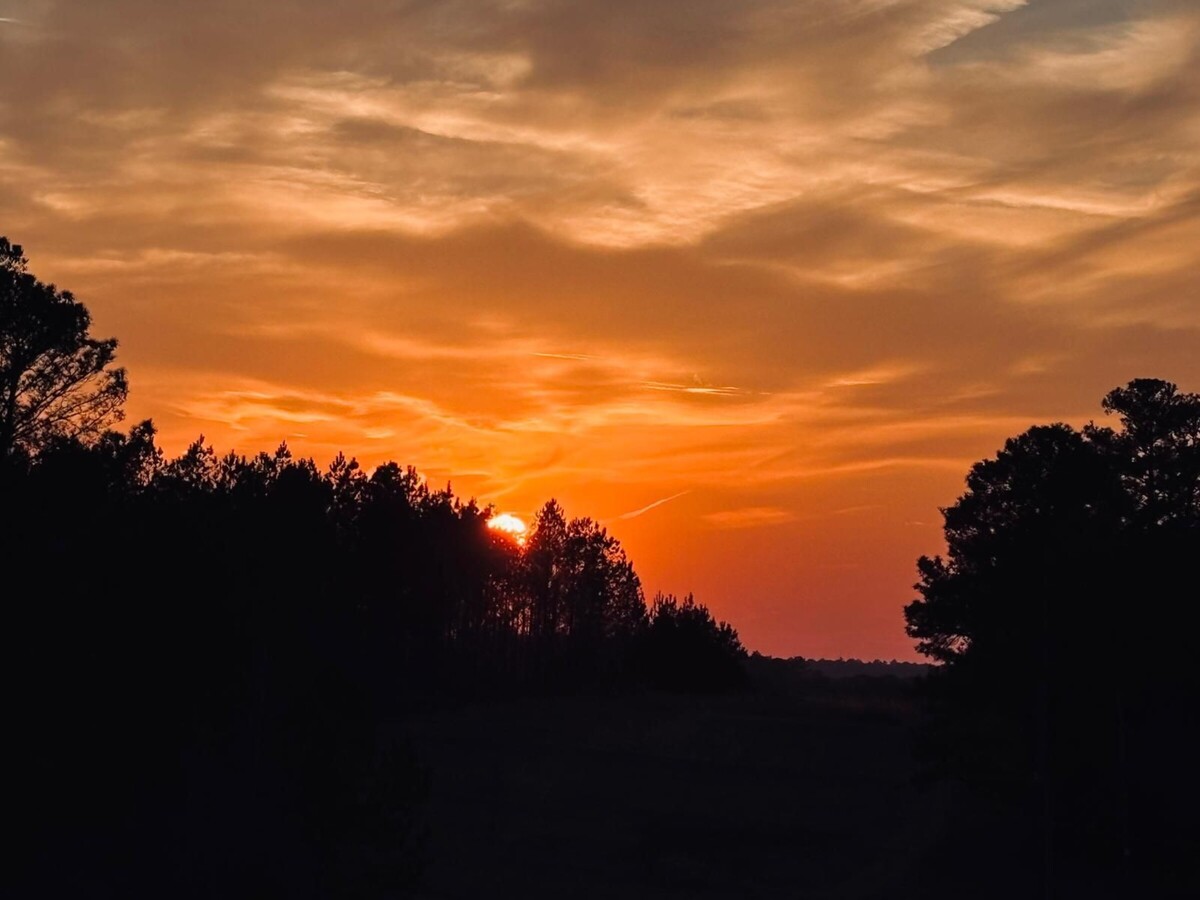
The skies in Middle Georgia often become gorgeous works of art during sunset (Photographer Nate Weeks)



This week will be a wet one, with a chance of showers from Tuesday night through Sunday night, according to the National Weather Service. On a more positive note, high temperatures will reach up into the low 70s, and low temperatures will stay well above freezing. While there aren't many astronomical events of note this month, there are important perspectives that can be gained by gazing into the celestial realm, especially if you take a few steps to prepare. The following is a day-by-day weather forecast for this week in the heart of Georgia.
Day-by-Day Weather Forecast
MONDAY, February 9th
Sunny skies with a high temperature near 67.
Monday Night
Mostly clear skies with a low temperature around 44.
TUESDAY, February 10th
Partly sunny skies with a high temperature near 73.
Tuesday Night
20% chance of showers, likely mostly after 1 a.m.. Cloudy, with a low temperature around 55.
WEDNESDAY, February 11th
40% chance of showers. Mostly cloudy skies with a high temperature near 73.
Wednesday Night
20% chance of showers before 1 a.m. Mostly cloudy skies with a low temperature around 51.
THURSDAY, February 12th
30% chance of showers, mainly after 1 p.m. Partly sunny skies, with a high temperature near 70.
Thursday Night
50% chance of showers. Mostly cloudy skies with a low temperature around 48.
FRIDAY, February 13th
50% chance of showers. Mostly cloudy skies with a high temperature near 64.
Friday Night
40% chance of showers. Mostly cloudy skies, with a low temperature of around 42.
SATURDAY, February 14th
50% chance of showers. Mostly cloudy skies with a high temperature near 59.
Saturday Night
50% chance of showers. Mostly cloudy skies with a low temperature around 44.
SUNDAY, February 15th
60% chance of showers. Cloudy skies and a high temperature around 60. Southeast winds shifting to northwest at 10 to 15 mph.
Sunday Night
40% chance of showers, clearing up later on during the night. Mostly cloudy skies with a low temperature of around 44 and wind gusts up to 10 mph.
ASTRONOMY IN MIDDLE GEORGIA
As discussed during last week's forecast, February only has a few astronomical events of note, including an Annular Solar Eclipse (which we won't be able to see) and a "planet parade." Stargazers can still enjoy watching the celestial show even without exciting events like asteroid showers of eclipses by finding a place with limited light pollution, making sure the skies aren't too cloudy (which would likely only be Monday night this week) or the moon too bright, and having a way to locate stars and planets. You can find constellations above us with a planisphere (a disc that helps astronomers find the position of the stars) or using an app like Stellarium help the curious identify those sparkly inhabitants of the dark skies. Astronomy is one way to understand how truly small our planet and all of its inhabitants are in our vast universe. It can help us gain a helpful perspective when dealing with difficulties and worries.



Sunny, with a high of 75 and low of 60 degrees. Overcast in the morning, clear during the afternoon and evening, overcast overnight.