66° and Overcast
Image
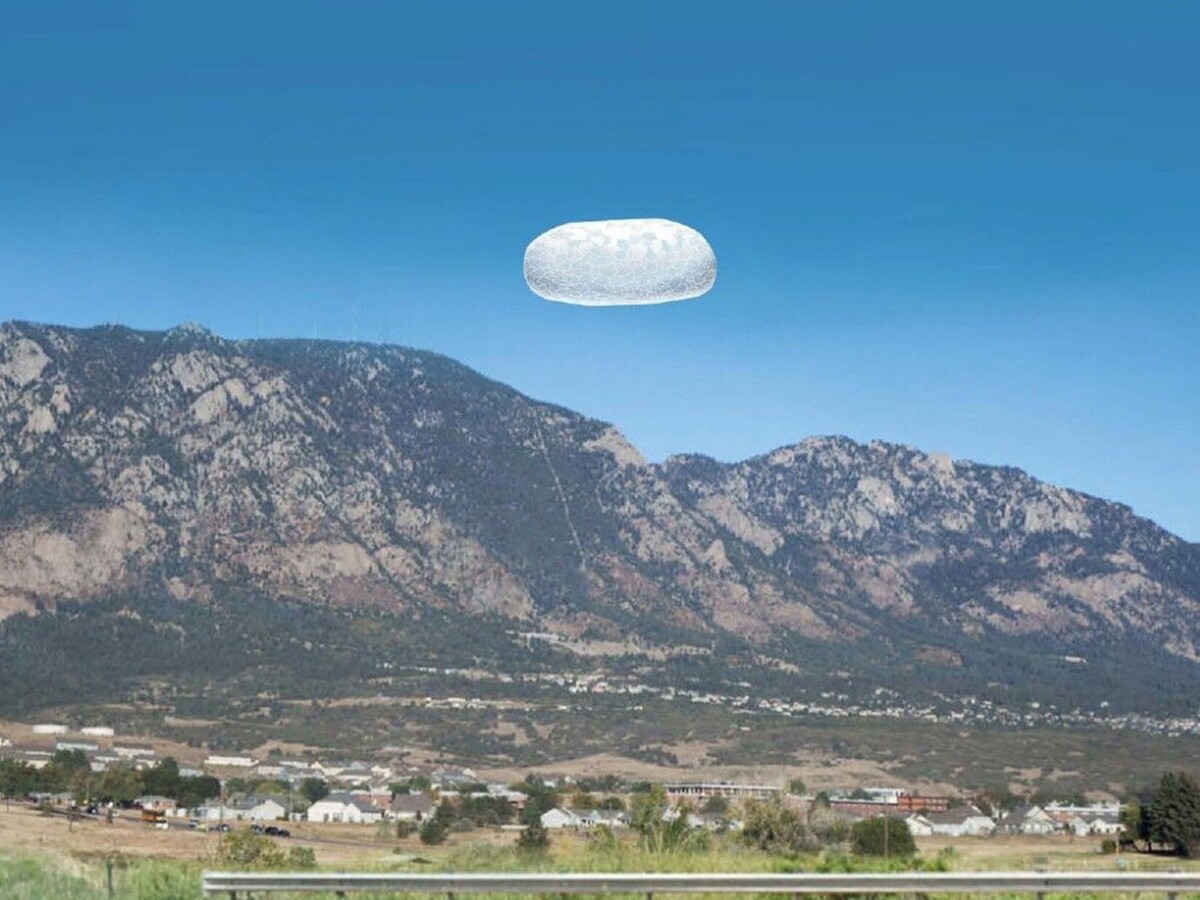
A digital representation of a UAP reportedly seen by a former U.S. intelligence officer and four members of his unit near Colorado Springs (Photograph courtesy of the U.S. Department of War)



During the 1980s, movies about extraterrestrials were very popular, with lots of movies made for mature audiences, like “The Empire Strikes Back” and “Aliens,” and films made for kids, including “Flight of the Navigator” and the blockbuster hit “ET.”
Some conspiracy theorists say that at least some of these movies were part of what is called “soft disclosure,“ where the government slowly reveals information about the subject of extraterrestrial life to filmmakers and others in the media in an effort to lessen potential negative impacts in the future once true disclosure of the same occurs.
I read a lot of science fiction books as a kid during that time period, and was of course also influenced by the many movies about the subject, so I was curious about the subject.
But I found it more of an interesting form of entertainment than anything else, especially when people who embraced the subject were called conspiracy theorists or crazy. After all, I didn’t personally know anyone who had experienced anything, so for all I knew, everything about the subject was meant to entertain or trick people into believing made-up stories.
That all changed for me when someone I greatly admired had his own very weird experience with UAPs (aka UFOs).
This was a man who had read the Bible through many times. He was known as someone who was a straight shooter and was very serious about telling the truth.
When he told me what he had seen one day in the ‘90s, headed home to his rural Georgia home, I became even more fascinated by the subject of UAPs and the possibility of extraterrestrials visiting our planet.
His story in a nutshell was that he was focused on driving on the country road leading to his home, one he had traversed more times than he could count, when he subconsciously noted two water towers on his left.
He was driving on automatic, intent on getting home to eat and relax after a long day at work, so he didn’t think much of what he had only half seen at first.
It took his brain a few more moments to register that he knew for an absolute fact there were no water towers at that location, and he quickly stopped and turned around to go back to see what had been here.
What he saw shook him: two large, silver colored water tower-shaped craft were slowly moving through the sky, making no sound, as they crossed over the road he had been traveling on and then began to travel over the deep woods that cover most of that area of the Middle Georgia.
What was even stranger was that when he attempted to take a picture with the 35 mm camera he always carried with him, it would not work.
He also claimed that when viewing the craft, he was overcome with a very strange feeling that he was being observed somehow.
From the moment I heard this trustworthy man recount what he had seen, I knew there was something more to the subject than fantasy.
But if you had told me that the subject would be openly discussed by government officials during my lifetime, I would have thought I was just hearing another entertaining tale of imagination and fantasy.
When I last covered UAPs in 2025, Congress had just held a major public hearing on the subject, a string of mysterious drone incursions was baffling officials at military installations from New Jersey to Germany, and a new presidential administration was promising more transparency than its predecessor. A lot has happened since then. Here is where things currently stand on this strange subject.
The most significant development since then came on February 20, 2026. President Trump signed an executive order directing the Pentagon and all relevant agencies to begin identifying and releasing government files related to UAP, alien life, and extraterrestrial materials. This followed through, at least in part, on a pledge Trump had made repeatedly during and after the 2024 campaign. Defense Secretary Pete Hegseth doubled down on that commitment shortly afterward, as the All-domain Anomaly Resolution Office’s (AARO) total caseload surpassed 2,000 reports.
Whether the order produces substantive releases or proves largely symbolic remains to be seen. Various videos and documents related to the subject have been published online, though there appears to be no solid evidence of anything beyond strange stories and objects that don’t appear to be conventional aircraft captured by both our government and civilians.
One of the more telling moments in the disclosure timeline came and went quietly in the fall of 2025. A deadline for all federal agencies to transfer UAP records to the National Archives, required under the 2024 National Defense Authorization Act (NDAA) passed on September 30, 2025. Several agencies complied, including Office of the Director of National Intelligence (ODNI), Office of the Secretary of Defense. (OSD), Federal Aviation Administration (FAA), and Nuclear Regulatory Commission (NRC), but the Federal Bureau of Investigation (FBI), Central Intelligence Agency (CIA), and most Department of Defense (aka Department of War) sub-agencies did not.
That partial compliance is consistent with a pattern critics have long identified: incremental movement toward transparency, with key players holding back.
Congressional attention to UAP has not let up. The 2026 NDAA, enacted in December 2025, mandated Pentagon briefings to lawmakers on the number, location, and nature of UAP intercepts by United States Northern Command (NORTHCOM) and North American Aerospace Defense Command (NORAD).
Whistleblower protections have also advanced on Capitol Hill. In September 2025, Representatives Tim Burchett and Ana Paulina Luna introduced bipartisan legislation to codify federal protections for UAP whistleblowers, explicitly prohibiting the revocation of security clearances as retaliation. That legislation follows years of complaints by figures like whistleblower and former U.S. Air Force officer David Grusch that their clearances were weaponized against them.
The House Oversight Committee’s Task Force on Declassification held its third public UAP hearing in September 2025, featuring military whistleblowers presenting new evidence and testimony on alleged government concealment.
One of the most closely watched recent releases came in early January 2026. The Department of Defense Inspector General published its final report on UAP-related whistleblower reprisal complaints, confirming investigations into security clearance revocation as retaliation. Heavy redactions in the document fueled further demands for transparency.
The redactions will frustrate anyone hoping for definitive answers, but the report’s confirmation that reprisal investigations were conducted lends credibility to claims made under oath by figures like Grusch in prior congressional hearings.
The Pentagon’s All-domain Anomaly Resolution Office, which was established to consolidate UAP investigations across agencies, has seen its workload balloon. AARO’s total UAP caseload officially passed the 2,000-report milestone as of June 2025, with approximately 1,000 reports lacking sufficient data for resolution held in what the office calls an Active Archive.
In August 2025, AARO also hosted its first formal workshop, bringing together government, academic, and civilian researchers to standardize UAP data collection and analysis. That kind of cross-sector collaboration represents a notable shift from the years when the subject was essentially confined to classified channels.
The disclosure conversation has not been limited to official channels. On January 20, 2026, filmmaker James Fox convened witnesses, medical experts, and government insiders at the National Press Club to present new evidence of alleged non-human encounters and crash-retrieval programs.
The Sol Foundation, founded by Stanford’s Garry Nolan, held its 2025 symposium at Lake Maggiore in Italy, bringing together scientists, former officials, and policy experts for one of the year’s most significant UAP academic gatherings.
And the subject has continued to penetrate mainstream media. In November 2025, a feature-length documentary called “The Age of Disclosure“ was released on Prime Video, featuring active and retired military personnel revealing firsthand accounts of UAP activity, including encounters at Vandenberg Space Force Base and alleged Russian craft recovery.
A less-noticed but potentially consequential development came from the aviation regulatory side. The FAA issued updated notices in October 2025 requiring all air traffic control personnel to report UAP sightings through standardized channels and notify AARO directly. If implemented consistently, that change could dramatically increase the volume and quality of civilian airspace data flowing to the Pentagon’s investigation office.
An executive order, mandatory records transfers, expanded whistleblower protections, growing congressional pressure, and a Pentagon caseload in the thousands are not the hallmarks of a fringe obsession.
Whether that institutional momentum produces genuine disclosure or a carefully managed trickle of declassified documents is the question that will define coverage of this subject for years to come.
I personally still don’t know what to believe about the subject. I know that every country on our planet is likely doing its best to create new and powerful technologies that could explain some of the sightings of strange things in our skies, and that people mistakenly identify things like stars and other phenomena all the time.
But, as Carl Sagan’s oft-cited standard goes, extraordinary claims demand extraordinary evidence. That bar has not yet been cleared in any public forum, in my opinion. What has changed substantially since we first began covering this story is the institutional weight behind the inquiry.
What is for certain is that our reality is much stranger than is often acknowledged. I hope that, when true disclosure occurs, we are left with more hope than fear and dread, and more definitive answers than the endless questions we are still stuck with for now.
Since 2021, Middle Georgia Times has been your source for the Middle Georgia events worth attending, people worth knowing, places worth exploring, and the businesses making our communities better.
Every week, we cover what's happening from Macon to Milledgeville, Warner Robins to Fort Valley, not to scare and divide our communities, but to inform, inspire, and connect. That's always been the mission: more positivity, less noise.
But here's the truth: keeping a local publication alive isn't free. It takes time, energy, and resources - and right now, Middle Georgia Times runs almost entirely on passion.
If you've ever found out about an event through us, discovered a hidden gem in your own backyard, or read a story that made you smile - this is your chance to give a little back.
A small donation goes a long way toward keeping Middle Georgia Times free, independent, and focused on what matters most: you and your community. You can help support Middle Georgia Times here or on Venmo (@MiddleGATimes).
Finally, thank you for reading Middle Georgia Times!



Sunny, with a high of 75 and low of 53 degrees. Sunny in the morning, overcast in the afternoon, clear overnight.